
Culture Doesn’t Change Because You Say It Should
Organizational culture change is the deliberate process of shifting the behaviors, norms, and shared expectations that shape how an organization actually operates, not just what it says it values. Unlike a values refresh or a communications campaign, genuine culture change requires aligning leadership behavior, organizational systems, and daily rituals around new ways of working.
Key takeaways from this article ▾
- Culture is a behavior system, not a values statement: what people observe matters more than what’s written
- Leadership modeling is the single most immediate cultural signal
- Organizational systems (performance reviews, incentives, hiring criteria) must change alongside cultural messaging
- Culture change gains traction when leaders focus on 2–3 critical behaviors rather than trying to change everything at once
- The question isn’t whether your organization has a culture. It’s whether that culture supports where you’re going
Technology gets attention. Strategy sets direction. But culture determines whether transformation actually happens.
Organizations invest enormous time and resources designing transformation strategies. They launch digital initiatives, redesign operating models, introduce new technologies, and promote new ways of working. Yet despite thoughtful planning, many of these efforts stall before they deliver their intended results. The reason is rarely the strategy itself. More often, the strategy moves forward while the culture underneath it remains unchanged. People continue making decisions the way they always have. Teams revert to familiar habits. Leaders unintentionally reward the same behaviors that existed before the transformation began. Over time, the organization gradually returns to the status quo.
Organizational culture change is one of the most overlooked factors in successful transformation. If the behaviors that shape everyday work remain the same, even the best strategies struggle to gain traction. For leaders navigating transformation, the real challenge is not simply announcing a new direction. It is creating the conditions where people begin to work differently.
Five Realities of Organizational Culture Change Leaders Must Understand
Leaders attempting organizational culture change often overlook several realities that determine whether transformation succeeds.
1. Culture is a behavior system, not a values statement
Many organizations invest heavily in defining their values. While these statements can be useful, employees rarely interpret culture based on what is written on a wall or published on a website.
Culture is defined by the behaviors people observe every day.
If collaboration is listed as a value but decisions continue to happen in silos, employees quickly learn which expectation truly matters. Changing company culture requires shifting behaviors, not simply messaging.
2. People follow what leaders model
Leadership behavior sets the cultural tone for the entire organization. When leaders demonstrate new expectations, whether that means collaborating across teams, embracing experimentation, or encouraging open dialogue, others begin to follow. When leaders do not model those behaviors, even well-designed culture initiatives lose credibility.
Successful culture change leadership begins with leadership alignment at the executive level.
3. Stories shape culture faster than strategy
Facts and data matter. But stories influence how people interpret change.
Employees rarely change how they work because they read a strategy document. They change when they see examples of teams succeeding in new ways of working. Leaders who successfully drive culture transformation share stories that illustrate progress, learning, and new behaviors across the organization.
This is the principle behind Lexico’s Think/Feel/Do Framework: culture moves when leaders learn to shift what people believe and feel, not just what they’re told to do. When a story lands, when someone sees a peer succeed in a new way of working, it changes the internal calculation faster than any mandate.
4. Culture shifts through focused behavior changes
A common mistake organizations make is trying to change every aspect of culture simultaneously. In practice, cultural momentum usually begins with a small number of critical behaviors. Identifying two or three actions that significantly influence how work happens creates clarity and allows leaders to reinforce those behaviors consistently. Examples may include transparent decision-making, cross-functional collaboration, or faster experimentation.
5. Organizational systems reveal what truly matters
Employees pay attention to signals.
What gets rewarded, promoted, measured, and celebrated communicates what is genuinely valued. If performance management systems or incentives reinforce legacy behaviors, employees will follow those signals regardless of the cultural language leaders use.
Culture change and organizational systems must evolve together.
How Leaders Drive Organizational Culture Transformation
While culture can feel intangible, it becomes visible through everyday practices and organizational structures. The Leaders who communicate consistently through change reinforce the behaviors they want to see through multiple channels simultaneously.
1. Model it from the top. When executives demonstrate new expectations in how they collaborate, communicate, and make decisions, they establish credibility for the change. Leadership example is the most immediate cultural signal.
2. Align organizational systems. Hiring practices, onboarding, performance reviews, and promotion criteria must reflect the behaviors leaders expect. Systems that still reward legacy behavior will always win.
3. Recognize and reinforce. Celebrating individuals and teams who demonstrate desired behaviors provides visible proof that the new direction is real,not just a communications campaign.
4. Involve employees. A people-first approach to transformation creates ownership. Listening sessions, feedback mechanisms, and collaborative design efforts allow employees to help shape the new culture, not just receive it.
5. Build rituals. Small rituals accumulate: the way meetings begin, how feedback is shared, how teams celebrate progress. They signal that new norms are emerging and make the change feel lived-in, not imposed.
Why Culture Change Initiatives Often Stall
Despite good intentions, many culture change efforts struggle to gain traction. Some organizations rush the process in an attempt to demonstrate immediate results. Others treat culture as a temporary initiative rather than embedding it into everyday operations. In some cases, leaders introduce too many cultural priorities at once, which makes it difficult for teams to understand where to focus.
Misalignment between culture and organizational systems is another common obstacle. If performance metrics and incentives remain unchanged, employees naturally continue working in familiar ways.
When leaders go quiet, employees fill the silence with their own interpretation of what the change really means — and that interpretation is rarely optimistic.
Why Culture Matters in Digital Transformation
Many digital transformation initiatives focus heavily on technology and process. However, without culture change, new tools rarely deliver their full potential. Organizations that succeed in digital transformation prioritize leadership behavior, collaboration, and employee engagement alongside technical implementation.
Technology can enable transformation. Culture determines whether people actually adopt it.
The Leadership Question That Matters Most
Every organization already has a culture.
The real question is whether that culture supports the future leaders are trying to build or quietly protects the past.
Transformation rarely fails because of strategy. It fails when the culture underneath the strategy never changes.
What is organizational culture change? ▾
Organizational culture change is the process of deliberately shifting the behaviors, systems, and norms that shape how an organization actually operates. It goes beyond rewriting values or launching communication campaigns — it requires changing what leaders model, what systems reward, and what stories get told about success.
Why do most culture change efforts fail? ▾
Most fail because they treat culture as a communication problem rather than a systems problem. When leaders announce new values but performance reviews still reward old behaviors, employees follow the review, not the announcement. Culture changes when what is measured, promoted, and celebrated actually reflects the new direction.
How long does organizational culture change take? ▾
Meaningful, measurable culture change typically takes 18–36 months in a large enterprise. Early behavioral shifts can be visible in 90–180 days if leaders are consistent and systems are realigned. Sustainable change, the kind that outlasts a program or a leadership cycle, takes longer and requires embedding new behaviors into how the organization hires, promotes, and operates.
What is the leader’s role in organizational culture change? ▾
Leaders are the primary culture signal. Employees don’t watch what leaders say. They watch what leaders do, what they reward, and what they tolerate. If senior leaders don’t visibly demonstrate the new expectations in their own work, no initiative will overcome that gap.
Can organizational culture really be changed? ▾
Yes — but not quickly and not through declaration. Culture is stubborn because it’s built from daily habits, incentives, and stories accumulated over years. Change it the same way: consistently, through behavior, through the systems that reward people, and through leaders willing to model something different themselves.
Culture Shift Checklist for Transformation Leaders
Understanding culture is one thing. Changing it is another.
Most leaders recognize culture matters, but few have a clear framework for turning that insight into action.
If you’re navigating transformation and want it to actually stick, this checklist gives you the structure, focus, and clarity to get culture moving in the right direction.
Download Lexico’s Culture Shift Checklist to learn the ten high-impact moves, avoid the most common missteps, and build a culture that drives results, not resistance.
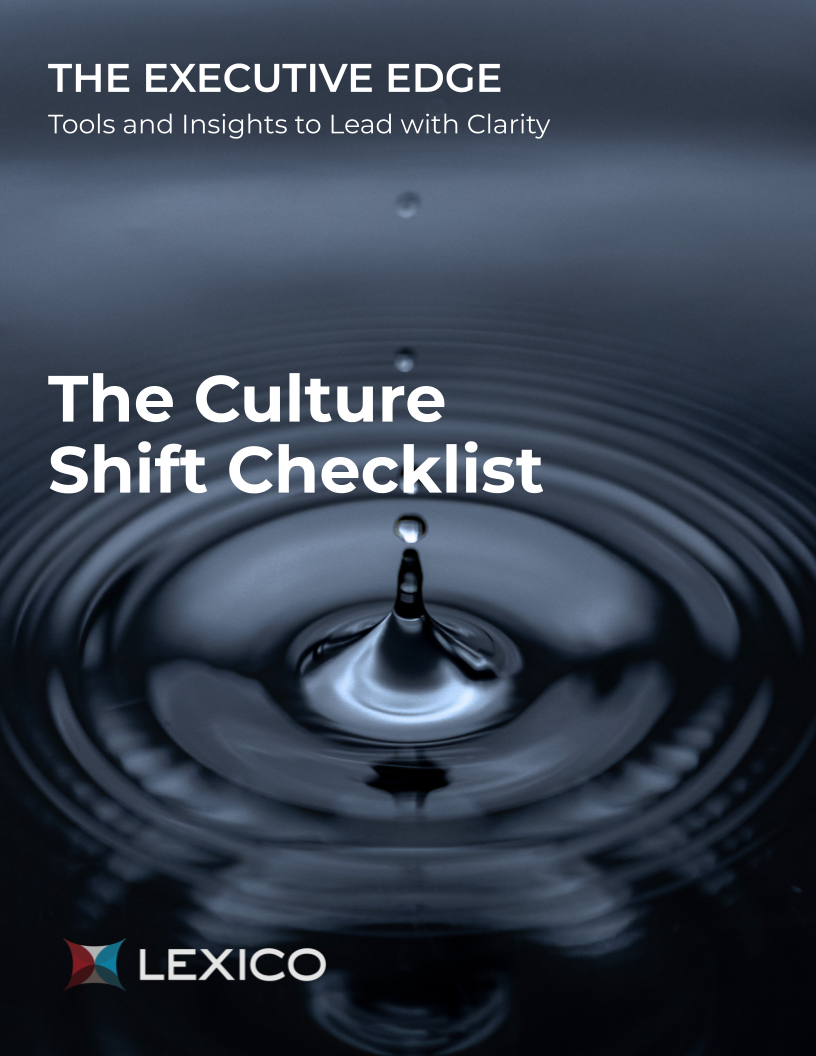
The Culture Shift Checklist
Drop your email and get instant access to the checklist.